Let the Heads Talk: Beyond Diagonal Graph Attention
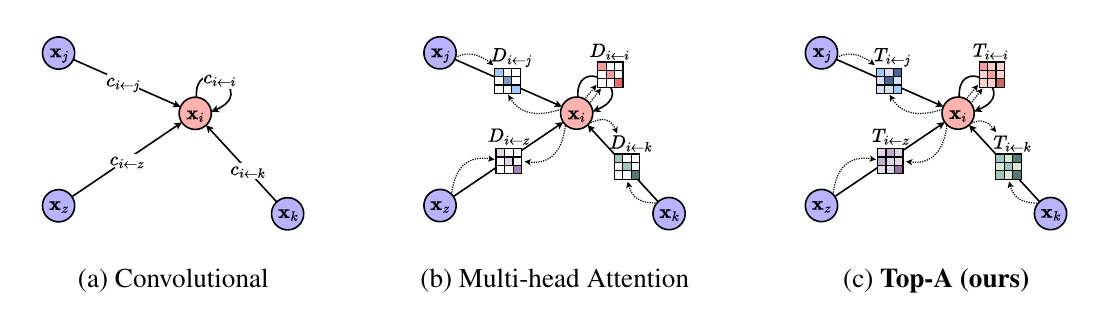
TL;DR We connect matrix-valued transport in sheaf networks to communication between attention heads, motivating a graph attention mechanism that learns how heads interact along each edge.
My research explores how mathematical structure shapes what neural networks learn, from symmetry and geometry to information processing in language models.
Google Scholar ↗TL;DR We connect matrix-valued transport in sheaf networks to communication between attention heads, motivating a graph attention mechanism that learns how heads interact along each edge.
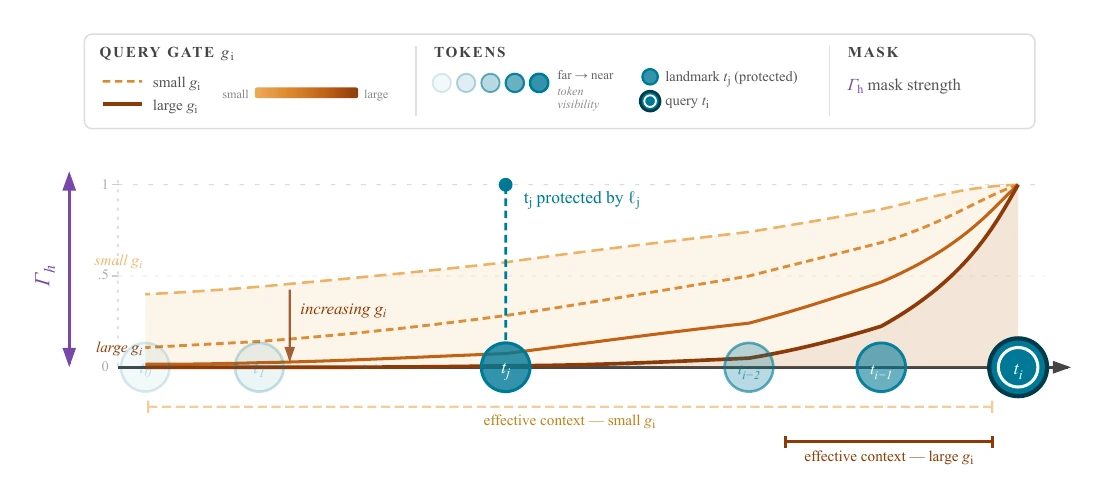
TL;DR We introduce GAPE, a mask that augments positional encodings with two mechanisms: one suppresses irrelevant distant context, while the other protects important tokens from that suppression.
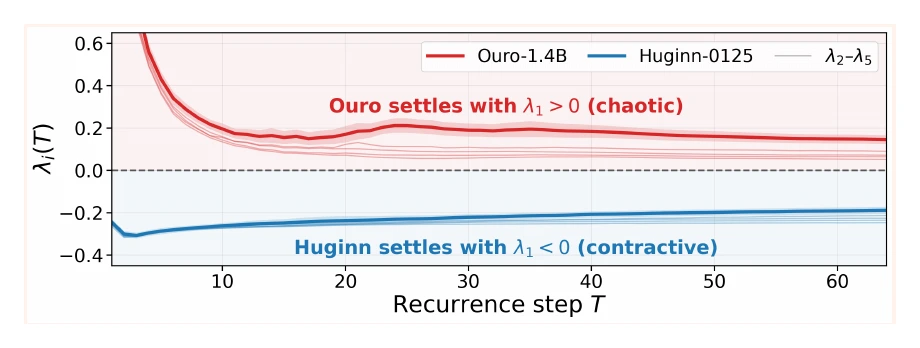
TL;DR Lyapunov spectra distinguish mildly chaotic dynamics in Ouro from contracting dynamics in Huginn, tracing the difference to opposing layer contributions.
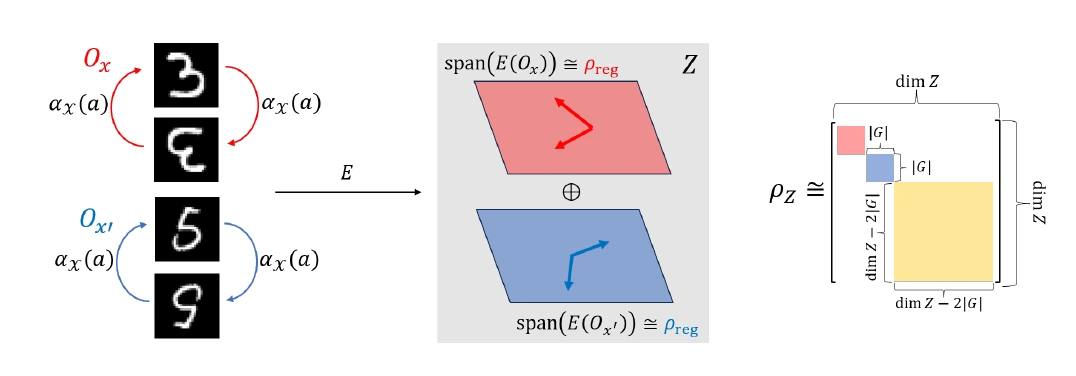
TL;DR We prove that, for finite groups, equivariant latent spaces almost surely contain copies of the regular representation, then use this structure as a parameter-free algebraic prior for approximate equivariance.
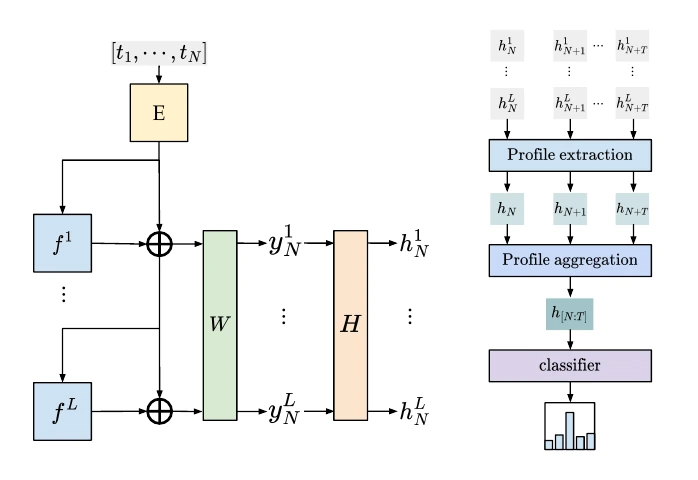
TL;DR Layer-by-layer entropy of token predictions reveals how LLMs expand and prune candidate continuations, with patterns specific to model families and tasks.
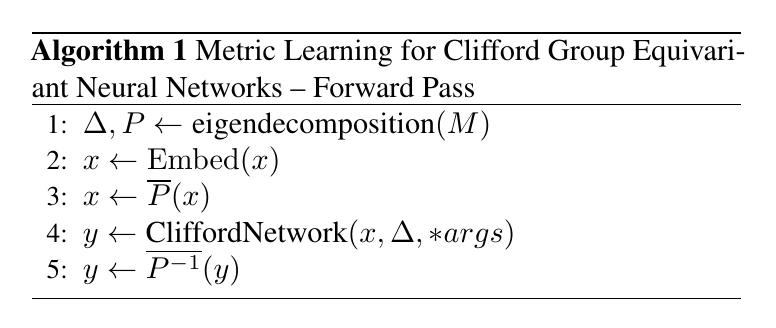
TL;DR We extend Clifford group equivariant networks to learn their latent metric from data, allowing the geometry of their representations to adapt to the task.
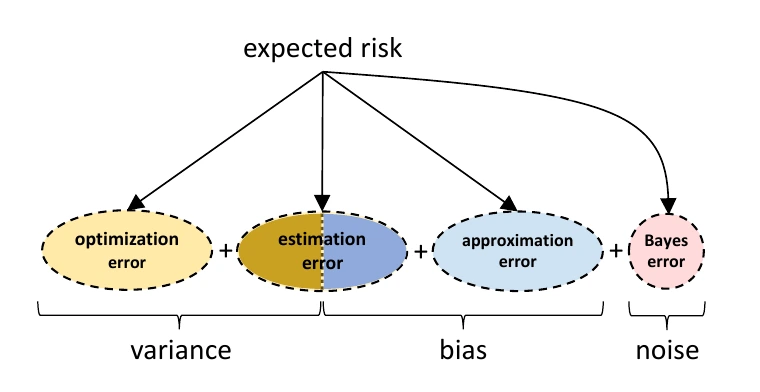
TL;DR Two classical explanations of prediction error are often conflated. We establish precisely how bias–variance and approximation–estimation differ and how they connect.